Behind the Masque
A Profile of Chef Angelo Auriana
Story by Jennifer Cliff Photographs by Carole Topalian
Angelo
Auriana of Masque Ristorante in El Dorado Hills has been a
professional chef for 25 years. He immigrated from Italy to
the United States in 1984 at the age of 22, after training
for 10 years in kitchens throughout Italy. Fortunately, he
met up with Piero Selvaggio in Los Angeles, and together they
opened Primi, a small-plates restaurant near 20th Century
Fox Studios. Regrettably, they were way ahead of their time;
customers then wanted large servings of one taste. Primi offered
Italian-style tapas, with innovative cuisine but no parking
- a combination that would never work in car-crazed Los Angeles.
Angelo laughs about it now, and other culture shocks as well.
"Piero helped shape me into a good chef, by understanding
wine pairing. But what is this - breakfast? It took me a while
to get used to people eating lunch at 11:30 in the morning.
I guess they started work early, so they were hungry by then."
In the Summer of 1986, at the age of 24, Angelo was offered
the coveted position of executive chef at Selvaggio's venerable
restaurant, Valentino. Angelo, young but certainly not inexperienced,
accepted the position partially because it was dinners-only
- not to mention that it was one of the most renowned restaurants
in Los Angeles.
"I started doing dinners for customers who could easily
average a $2,000 wine tab, and I had the immediate challenge
of figuring out what to cook for them. In fact, that became
my specialty - you come to me with the wine, and I'll cook
for that. It's Italian-based prep, from Puglia to Sicily,
my own take rather than northern versus southern regional
cooking. In the U.S., people don't distinguish Napa cuisine
versus Sonoma cuisine."
Angelo followed his heart and prepared innovative, seasonal
cuisine with inspiration from all regions in Italy. He notes,
"People today are exposed to more, have traveled more,
and have learned more. Then expect more from their dining
experiences."
Angelo worked as the executive chef at Valentino until his
friend and future partner, Nick Rivieccio convinced him it
was time to orchestrate their own unique venture together:
Masque Ristorante. Masque was a collaborative effort with
developers Jon Douglas and Roger Hume to design and build
not only their own restaurant but an entire shopping center
that Masque would anchor.
Today, Masque is a superb example of no-expense-spared craftsmanship.
The La Borgata shopping center was designed to resemble a
Tuscan village in Italy. The decadent yet very comfortable
dining room seats 100, in addition to a large bar area, where
customers are offered a choice of the full menu from Masque
or from the café menu from the Cantinetta.
The Cantinetta is Angelo and Nick's gift to the neighborhood
- for those who can't wait for Masque's dinner hours, here
you can shop and dine on a wide variety of Italian delicacies.
The café's menu offers casual fare such as salads,
thin-crust brick oven pizzas, specialty cheeses and meats,
as well as wines by the bottle and glass. Angelo describes
the Cantinetta as his casual laboratory to experiment in -
they have a drying unit for aging meats and a huge pizza oven
shipped from Italy. Special wines, fish, meats, and other
gourmet goodies are available as well.
Just like any good business man, Angelo wants to develop his
retail business slowly, over time, to develop it into a truly
unique specialty food outlet that grows and evolves over time.
"The Cantinetta is really a food and wine boutique,"
says Nick. "It gives us a different entity, and supports
the community for lunch and dinner."
As Angelo sees it, "Fine dining n El Dorado Hills is
very different here than the intensity of fine dining in Los
Angeles. At Primi and Valentino, customers dined in power
suits and conducted business. Here, it's more casual and relaxed
- they come after the work of the day is over."
That's understandable, adds Nick. "When you've been
wearing a suit all week you want to come here, unwind and
relax - but still be able to enjoy the finest cuisine."
Nick is adamant that their first priority is quality, and
the partners will never compromise in their desire to bring
the best of everything to their customers. One can almost
consider them designers - Angelo does not adhere to any set
of rules, instead he creates his own classics. He is a food
artist; style is critical to him, so the following metaphor
is appropriate.
"As an Italian born, style is everything. You need new
jeans, new shoes, and you care about how everything looks.
You can put on an Armani suit and you know it's the best."
Fast
forward to today: His plates, the flavors, and the presentations
are spectacular. Nick explains: "Angelo has developed
his own style of cooking - like cavatelli and crawfish. He
was innovative in Los Angeles in the '80s, and he's still
innovative today."
Adds Angelo, "My generation of Northern Italians grew
up knowing they wanted to be successful. We were ready to
bloom, explode, and make it happen. You must be yourself -
you must be an innovator. I'm not someone setting new trends
- I'm forging new traditions."
Angelo enjoys using local ingredients - the produce is best,
and he has started attending a weekly farmers' market for
chefs in Yolo. Called "Sundays in the Barn," the
market lures chefs from the area and Angelo has grown very
fond of going there. Nick boasts that "Farmers started
growing things they didn't know they could grow because of
Angelo's influence. Italian beans, broccoli rabe, bok choy
- anything Angelo wants, they'll grow."
Masque is truly a labor of love for these men. The partners
admit they virtually live at the restaurant, which opened
on March 29, 2004. A year later, they consider all of their
58 member staff extended family members.
"This is not work," says Nick. "This is a lifestyle."
The staff is clearly happy; during a quick meal at Cantinetta
our waitress confirmed Angelo and Nick's feelings.
"I've worked here since they opened, and this is the
best job I've ever had. They make you feel successful, and
appreciated, which makes you want to do a great job for them.
Everyone who works here adores them."
Angelo is proud of Ginger Powers, pastry chef, whose desserts
are highly sought after and the extraordinarily gracious and
lovely hostess, Aurelia - he feels it was good luck that led
her to them. "She was living nearby, looking for a job
and just came in - she's perfect for us."
On the first Thursday of the month the Cantinetta offers
wine tastings. Nick and Angelo like to feature small, out-of-the-mainstream
winemakers whose wines they truly enjoy. They're not out to
impress anyone but themselves. They laugh when they say: "We
want to support guys with dreams - winemakers with limited
production and lofty goals."
Masque's wine list offers over 400 selections, and "Simon
the Smeller" (Masque's wine guy) is a favorite of customers.
Although he's not yet reached sommelier status, Simon leaves
no stone unturned in his quest to learn everything he can
about wines, and he has an encyclopedic memory of Masque's
wine list.
The restaurant offers seasonal outdoor dining, alongside
a small herb garden planted with tomatoes, eggplant, fennel,
and herbs. Though it hardly provides enough produce for the
restaurant, it gives the staff a visually appealing reference
point. Angelo explains, "It doesn't really produce enough
for the restaurant, but it helps us teach young chefs to know
a zucchini blossom when it's growing." Even the occasional
wedding takes place in the garden - one was recently officiated
by Nick Rivieccio himself.
We finished our visit to Masque with a tour of the restaurant
and its jaw-dropping 3,000-square-foot kitchen. (This is not
a typo.) The kitchen features an extravaganza of professional
cooking equipment and stations - a virtual mecca for any chef.
It rivals the finest commercial kitchens in the world, as
do the smells that emit from within. The gallons of simmering
veal stock nearly made us weep from desire alone. Angelo smiles
and admits, "They tried everything to entice me to come
here. I guess it worked."
Main on a Mission
Story by Tracey Ryder Photographs by Carole Topalian
When
I meet up with Annie Main in the kitchen of her rustic farmhouse,
it's been raining for days and she's trying to stay ahead
of the mud by mopping floor tiles and rearranging doormats.
It's 8:30a.m. and I'm a half hour early for our appointment
because the drive from Sacramento out to western Yolo County's
Hungry Hollow area, where her farm, Good Humus is located,
took less time than I had expected. Even with the mud, my
early arrival, and the fact that it's a Friday - the day when
the entire Main family works together harvesting produce for
their weekly trek to the Davis Farmers' market - she offers
a freshly brewed pot of chamomile tea and serves sliced oranges
and dried persimmons, which I happily eat until they disappear.
Before we officially begin the interview, and while Annie
finishes up in the kitchen, I sit at the large dining table
trying to absorb everything I've seen in the past hour. The
rainy drive through a constantly changing landscape, the beautiful
green hills of the Capay Valley and its expanse of open space,
ninety-degree turns through tiny towns, and finally the blast
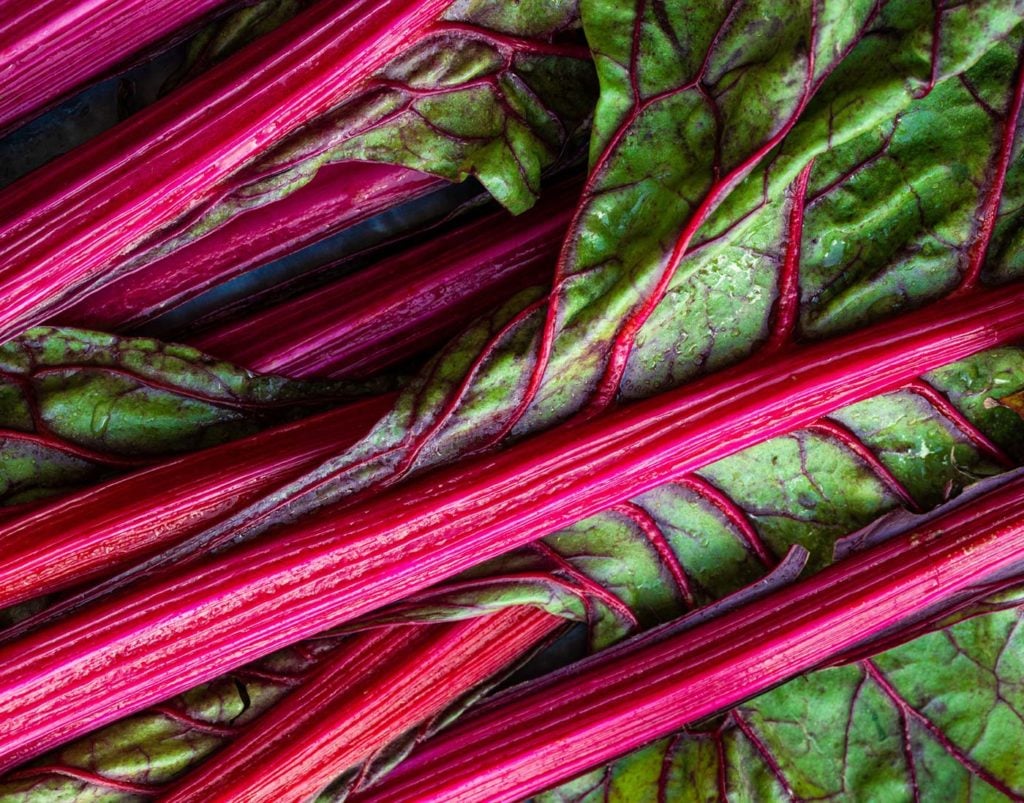
of bright pink color emerging from the grey skies that signal
our arrival at Good Humus farm, all leave me feeling exhilarated,
yet calm.
As we begin, Annie gives me some history on both her family
and the farm. She and husband, Jeff Main, met when they were
students at UC Davis back in the 1970s. She was studying renewable
natural resources and Jeff was becoming a civil engineer.
Together they've been farming for 29 years with 22 of those
years spent here, at Good Humus. This twenty-acre organic
spread provides roughly 160 families - in San Francisco, Woodland,
Davis, and Sacramento - with weekly subscription boxes through
the Good Humus CSA (Community Supported Agriculture) program.
Good Humus produce can also be found at the Davis and Sacramento
Co-ops, as well as the Davis Farmers' Market every Saturday
from 8a.m. - 1p.m., which is also where you can purchase the
delicious preserves and syrups Annie makes with her friend,
Ann Evans, under the brand name Evans and Main. (Do not miss
the lavender syrup!)
Jeff and Annie have three children - Zachary, Alison, and
Claire - all of who help as much as they can with the farm's
operations. Their chores range anywhere from creating and
maintaining the farm's website, to working the family's booth
at the Davis farmers' market, and everything in between.
I ask Annie if she thinks her children will want to be farmers
and she replies by saying that Zachary, her oldest, went to
New Zealand with a friend where the two boys participated
in the apple harvest. "There's some interest there I
guess," she says. "He went all the way to New Zealand
and did some of the very same work he does when he's here."
In fact, the future of this farm and how it will endure through
future generations is the real reason I'm here today. I have
been told that Jeff and Annie, in an attempt to ensure their
farmland stays farmland forever, have entered into the process
of preservation called a Shared Equity Agricultural Easement.
In an era where family farms in California and across the
nation are struggling to hold onto their farms, this process
unites local communities with family farmers in a partnership
"committed to stewardship of agriculture lands in accordance
with sustainable and environmentally sound practices,"
according to the Good Humus website (www.goodhumus.com).
In
simple terms, the way this works is that the easement allows
the value of the land to be based on its "agricultural
value" and not its "fair market value," thus
removing it from the speculative real estate market. To facilitate
this process, a land trust that is experienced in developing
and managing agricultural easements, (in this case, it is
Equity Trust, Inc., of Maine) creates the legal documents
necessary to ensure the land remains affordable enough so
that future generations can afford to farm it.
Through a series of fund raising events and charitable donations,
Jeff and Annie are in the process of raising the $300,000
required to purchase their Agricultural Land Easement and
to make their Farm Preservation Campaign a reality. Annie
goes on to further explain their motivations behind these
efforts: "This is a good way for the community to share
in the responsibility for preserving farmland and for making
sure they have local foods available to them for generations
to come. To make sure there are going to be fresh, healthy
foods that are grown using sustainable methods, available
to people in communities across this nation, is going to take
a lot more effort than what farmers can do on their own."
The Mains are not alone in this thinking. In fact, they were
inspired to go this route by Steven and Gloria Decater of
Live Power Farm in Covelo, who put their farm into this type
of preservation model back in 1995 and have served as Jeff
and Annie's mentors and role models ever since. And, for the
very first time, the Marin Agricultural Land Trust (MALT)
has included a requirement for active farming in one of its
recent easements. Let us all hope this trend prevails. With
highly intelligent, forward thinking, involved farmers like
the Decaters and Mains leading the way, surely others will
follow.
By
the end of our interview, I am acutely aware that farming
is not what it used to be when Annie and Jeff's ancestors
were farming. I doubt they ever had to consider the difference
between the unrestricted fair market value of their land versus
the restricted agricultural value. Nor would they have considered
farm events or the Internet to be necessary fund raising vehicles
to preserve their land for active farming. They might agree
that both represent progress in the ability to communicate
with larger numbers of people, albeit with their inherent
obstacles and complications. But the thing I take away with
me today, aside from having learned more than I could have
imagined about easements, is summed up in Annie's own words
as well as her prevailing positive attitude toward a future
where people in communities across the country will still
have the opportunity to know the name of their local farmers
and to know where their food comes from. "I really love
people loving the food. When they get our newsletter in their
CSA box each week, it's like a letter from home - it has recipes
and talks about the produce." What the customers of Good
Humus might not know, however, is that, as Annie says, "selling
our produce to people feeds me as much as it feeds them. I
don't always like the struggles that come with farming today,
but I love doing this."
To learn more about Good Humus Farm, their CSA program, or
their Farm Preservation Program, visit www.goodhumus.com
To make a tax-deductible donation toward their efforts, contact:
Equity Trust, Inc.
P.O. Box 746
Turner Falls, ME 01376
(413) 863-9038 www.equitytrust.org
Swirl of the Season
Story and Photographs by Daren Cliff
"Would Miles give it a 90?"
Welcome to the premiere issue of Edible Sacramento and the
"Swirl of the Season" column. Miles, the neurotic
enophile with humorously poor judgment from the movie Sideways,
would never give a rating of 90 or above to a Merlot regardless
of how good it is. Most of us would probably not have any
regard for what Miles would score a wine anyway. So why, in
this period of "vino enlightenment" that this country
is going through (statistics show that premium wine sales
have risen every year over the last decade), do we as consumers
put so much value into a couple of publications reviews and
ratings?
I once saw a cartoon in which a gentleman is tasting at a
wine bar. The caption reads, "God, this Cabernet is terrible
- it's vegetal, tart, and unbearably tannic." The pourer
replies, "The 'Wine Review' gave it a 95" - and
the customer says, "I'll take a case." What makes
this cartoon funny is the fact that I have stood next to that
customer many times!
So
why do we take a couple critics' opinions as divine edict
when purchasing a bottle of wine? The two most widely read
wine critics have both cautioned that their reviews should
be used as a starting point for the readers to ultimately
find the wines that they love. Let me shed some light on the
subjectiveness of individual taste. There is a famous Napa
Valley Estate that produces world-class Cabernet Sauvignon;
many of its vintages have been highly sought after. These
same two critics disagreed entirely on the 2001 vintage of
this great Cabernet. One scored the wine 96 points while the
other mirrored that score with 69 points. Whom shall we believe
or trust? The only thing for certain is that this wine will
probably fall somewhere in between these extreme opinions,
depending on who is drinking it.
The purpose of this column is to suggest wines to seek out
and try. If a wine is listed here, the staff and I think it's
a "good" wine. My feeling is that there is way too
much energy being expelled on researching, cataloging, and
keeping stock of wine scores. I would like to encourage you
to spend your energy researching wines and the regions they
are from, including the history, the culture, and the cuisine.
In the end, your enjoyment is the only validation necessary.
To me there is a lot of value in reading about a particular
wine and its backstory, then seeking out that bottle of wine
to give it a try.
"Swirl of the Season" will always have a spotlight
on a local producer and a couple of wines that they produce.
By local I am referring to the Sierra Foothills, Lodi, and
the Delta Area. In this issue we tracked down Rich Gilpin
from Lavender Ridge Vineyards. In addition, this column will
always feature several other wines from virtually anywhere
in the world that are linked by some sort of commonality,
such as regional, varietal, etc. In this inaugural column
we take a cue from the movie Sideways and explore the Santa
Rita Hills appellation of Santa Barbara County and some amazing
Pinot Noirs.
Lavender
Ridge Vineyards
The first wine of Lavender Ridge that I tried was their
2003 Sierra Foothills Grenache and suffice to say after the
first sip I knew which local producer I wanted to feature
in this inaugural issue. Lavender Ridge is a boutique ultrapremium
producer of strictly Rhone varietals. My wife and I met up
with Rich Gilpin at his tasting room in Murphy's the second
week of March in the midst of abnormally gorgeous weather,
80 degrees. Immediately we got right into tasting the whites
while Rich began to tell us how he and his wife, Siri, ended
up starting their own winery in Calaveras County.
Rich's parents own Windwalker Winery in El Dorado County.
Until a couple years ago Rich was the wine maker for 10 vintages
of Windwalker wines. Prior to that, Rich had held a wine making
position with a boutique winery in the Chalk Hill appellation
of Sonoma. He is a graduate of the enology program at UC Davis.
While making wines for his father he began to ease into the
production of his own wines a barrel at a time, using several
different facilities that he was consulting for on the side.
Three years ago he planted seven acres of Rhone varietals
on a site he bought in Copperopolis. It was a little over
a year ago that he decided to get serious with this project
and moved his family to Valley Springs.
He is currently sharing a facility with his good friend Matt
Hatcher of Hatcher Wines in Fair Play. However, plans have
been drawn up for a facility at the vineyard site and within
two to three years he plans on being entirely estate grown.
The estate vineyard is certified organic, which Rich notes
"will make buying other grapes difficult in the future,
because we will want to show off the fact that we are organic."
The land they purchased had sat idle for 150 years and since
day one the Gilpens did not put a chemical on it. This streamlined
the organic certification process considerably.
In 2001 Lavender Ridge produced a small amount of Syrah only.
In 2002 he crushed Syrah, Viognier, Rousanne, Mourvedre, and
Grenache. He has continued to focus on these varietals since.
All of the wines produced use native yeast and are unfiltered.
Rich's feeling on style is to "steer away from over-the-top
wines, opting for fruit-forward wines that show off their
varietal characteristics." Each vintage Rich tries to
do a special bottling of some "other" Rhone grape,
such as his 2003 Carignane.
The first wine we tasted was the 2003 Viognier ($18), which
is a blend of young vine fruit from Amador and El Dorado counties.
It is 100% barrel fermented (20% new oak) and aged on the
lees giving it a very creamy quality without being cloying.
It is a pale straw color with gorgeous aromas of apricots,
pear, and brioche. In the mouth there is great acidity and
a distinct minerality that supports the intense fruit flavors.
The 2003 Rousanne ($22) is young vine fruit from a vineyard
in Amador County. Rich is striving to make Rousanne that "is
not over-ripe and Viognier-like more French in style."
The wine is straw-colored showing complex aromas of toasty
oak, almonds, white stone fruits, and honeysuckle. It has
a very viscous mouthfeel that blends well with the vanillin
oak undertones.
Rich's
2004 Grenache Rose ($14) should be the model for those attempting
to make dry rose. It is a light cherry color and bursts with
vibrant aromas of fresh-cut strawberries. It is bone dry with
incredible intensity of berry flavors from start to finish.
With Spring upon us, seek this wine out!
The 2003 Grenache ($24) comes from a vineyard on Apple Hill
in El Dorado County. The '03 is the second harvest from this
vineyard. It is 100% Beucastel Clone and shows the elegant
side of Grenache. It is a garnet red color with bright aromas
of strawberries, cocoa, and spice. It has incredible texture
with loads of jammy fruit flavors and hints of white pepper
lingering in the finish.
The only wine to come from "old vines" is the 2003
Carignane ($24). The vineyard is off of Jackson Ridge and
is 87 years old. This was, as Rich put it, "a one-time
deal" and I was glad to be around for it! The Carignane
is deep red color with aromas of tart cherries, raspberries,
and tobacco. As with all of Rich's wines the mouthfeel is
very complete with lots of upfront briary fruit and, in my
notes, simply an "amazingly long finish."
The 2002 Syrah ($28) is the most structured of the reds,
but is still impeccably well balanced. The Syrah was aged
in 25% new French oak. It has an almost opaque purple hue
and aromas of crème de cassis, vanilla stick, and fresh
provincial herbs. In the mouth the wine boasts intense raspberry,
kirsch, and spice flavors on a glycerol frame that leaves
you reaching for more.
These wines are some of the best expressions of Rhone varietals
in California I have tried. They are worth the time to seek
out. You will end up going back for at least a case - trust
me, I did! They are available at local wine shops such as
Taylor's Market, Il Forno Classico, Corti Brothers, Carpe
Vino in Auburn, and Dolce Vino in Cameron Park.
You can visit the winery website at lavenderridgevineyard.com
and order directly. The tasting room in Murphy's is open Saturday
and Sunday.
Santa Rita Hills
Back to Miles and his journey through Santa Barbara wine
country and life. In the movie their first stop is at Sanford
Winery, in the heart of Santa Rita Hills. Santa Rita Hills
is the newest appellation in the Santa Barbara region. In
the mid 1980s, grape growers and wine makers alike started
to notice this valley for its unique microclimate and growing
season. What they realized was that this area produced distinctly
different wines than that of neighboring Santa Ynez and the
Santa Maria valleys. Santa Rita Hills lies in the Santa Ynez
River valley beginning west of the town of Buellton (on Highway
101) heading toward the coast and the town of Lompoc. It is
just in the past 10 years that local wine makers have taken
cause with giving this area distinction with its own AVA (Appellation
Viticultural Area). Wine makers such as Brian Babcock, Rick
Longoria, and Greg Brewer lobbied heavily for the approval
of the AVA . . .
Today there are more and more vineyard projects popping up
within Santa Rita Hills. Famous wine makers from all over
the state are going to great lengths to secure vineyard contracts
within the area. Why? The microclimate is incredibly different.
Fog settles in from the coast through Lompoc on into the greater
Santa Ynez Valley. As it burns off inland near Santa Ynez
proper, it stays socked in much longer in Santa Rita. The
daytime high in the central Santa Rita Hills can be as much
as 25 degrees cooler than in the town of Santa Ynez, just
15 miles inland. This maritime influence creates incredible
"hang time" for the grapes and a long ripening season.
Syrah grapes from certain vineyards in 2003 were not physiologically
ripe and picked until November.
What grows best? It is the general consensus that the three
best varietals are Pinot Noir, Chardonnay, and Syrah. The
wines here have a common thread: concentrated colors, amazing
depth of flavors, great acidity, and a firm tannic structure
in the reds. The Pinot Noir grown here is gaining incredible
recognition. As mentioned above, many wine makers across the
state are seeking it out. Thus the best vineyard sites yield
some of the most expensive fruit in the state. Pinot Noir
here is usually a very dark saturated purple color, some say
Syrah-like. On the nose and the palate it usually has intense
dark fruits, shying away from the higher tone fruits and herbal
quality typically inherent to Pinot Noir. Consumers are definitely
tagging room in their cellars for these wines as many of them
are small production and are selling out upon release. As
in all great appellations, there is a certain unexplainable
quality that is inherent and quite provocative.
Here are seven Pinots from Santa Rita Hills that are worth
seeking out:
They will take some searching to find. I suggest going to
your favorite wine retailer to see if they have the wine and,
if not, asking them to order it for you. For more specific
questions and tips on wine buying, I can be reached at daren@ediblesacramento.com.